


My Account
Which Types of Flooring Are Waterproof
Posted on by STUART PEARCE

Choosing waterproof flooring is one of the most important decisions when renovating kitchens, bathrooms, utility rooms or entrance halls. While many modern flooring products offer excellent resistance to moisture, not every floor covering is completely waterproof, and choosing the wrong material can lead to swelling, warping or costly replacements.
In this guide, we'll explain which types of flooring are waterproof, which are only water-resistant, and which materials are best avoided in areas where moisture is likely to be a regular occurrence.
Sheet Vinyl Flooring – One of the Best Water-Resistant Options

Sheet vinyl flooring is one of the most affordable and practical water-resistant flooring options available. Manufactured from a continuous sheet of PVC, it creates a highly water-resistant surface with very few joins, helping to prevent moisture from reaching the subfloor. In wet areas, such as bathrooms, care should be taken to seal the edges with a good quality silicone sealant to prevent water ingress around the perimeter.
Sheet vinyl is particularly suitable for:
- Kitchens
- Bathrooms
- Utility rooms
- Cloakrooms
- Rental properties
Modern vinyl flooring is available in a huge range of realistic wood, tile and stone-effect designs, making it easy to achieve a premium look without the premium price.
Many vinyl floors also feature textured surfaces that provide improved slip resistance, making them a practical choice in rooms where wet floors are common.
Luxury Vinyl Tiles (LVT) – Premium Waterproof Performance

Luxury Vinyl Tile (LVT) offers many of the same waterproof benefits as sheet vinyl but with a more premium appearance and increased durability.
Because LVT is manufactured from waterproof vinyl layers, it is highly resistant to spills, humidity and everyday moisture, making it ideal for:
- Kitchens
- Bathrooms
- Hallways
- Dining rooms
- Open-plan living spaces
Unlike traditional sheet vinyl, LVT is supplied as individual planks or tiles, closely replicating the appearance of natural wood or stone. LVT is regarded as fully waterproof. Even if water escaped the edges, it would not cause an issue to the flooring itself, due to it's waterproof construction.
Many LVT collections also include textured wear layers and anti-slip finishes, offering additional reassurance in family homes.
Laminate Flooring – Not Always Waterproof

Laminate flooring has improved significantly in recent years, but it is important to understand that not all laminate flooring is waterproof.
Traditional laminate contains a high-density fibreboard (HDF) core, which can swell if exposed to standing water for extended periods.
However, many modern collections are now specifically manufactured as waterproof or highly water-resistant laminate flooring. These products feature:
- Improved locking systems
- Moisture-resistant cores
- Enhanced edge protection
- Protective waterproof surface coatings
Always check the manufacturer's specification before installing laminate in kitchens, utility rooms or other areas where spills are common.
Standard laminate should generally be avoided in bathrooms unless it has been specifically designed and approved for wet environments.
Coir Matting: Ideal for Entrance Areas

While not a waterproof flooring itself, coir matting deserves a mention because it plays an important role in protecting interior floors.
Installed inside entrance halls and porches, coir matting effectively removes dirt and moisture from footwear before it reaches your main flooring.
This helps reduce wear, keeps floors cleaner, and limits the amount of water carried into the home during wet weather.
What Flooring Should You Avoid in Wet Areas?
If waterproofing is your main priority, some flooring types are generally less suitable.
These include:
- Standard laminate flooring without waterproof protection
- Solid hardwood flooring, which can expand and contract with moisture
- Natural fibre carpets such as sisal and seagrass
- Most carpets in bathrooms or wet rooms
While some of these materials perform perfectly well elsewhere in the home, they are less suited to environments where standing water or persistent humidity is expected.
Slip Resistance Matters Too
Waterproof flooring should also provide good grip underfoot.
Many modern vinyl and LVT products include textured wear layers or anti-slip finishes that improve traction, helping reduce the risk of slips in kitchens, bathrooms and utility rooms.
If safety is a priority, particularly in family homes or properties occupied by elderly residents, it's worth choosing flooring that combines waterproof performance with enhanced slip resistance.
Final Thoughts
If you're looking for flooring that can comfortably handle moisture, spills and everyday family life, sheet vinyl and Luxury Vinyl Tiles (LVT) remain among the best all-round choices. Both offer excellent water-resistant performance, are easy to maintain, and are available in a huge range of attractive designs.
Waterproof laminate flooring can also be an excellent option, provided you choose a product specifically designed for wet areas. Standard laminate, however, should be used with greater caution where moisture is regularly present.
Finally, don't overlook the value of coir matting. Preventing water from entering your home in the first place is one of the simplest ways to protect your flooring and help it last longer.
By selecting the right flooring for each room, you can enjoy attractive, practical floors that withstand everyday spills and continue to look their best for years to come.
You may also like
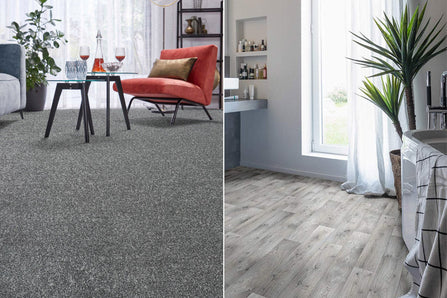
Carpet vs. Vinyl Flooring: The Complete Comparison Guide
Choosing brand new flooring for your home can be one of the biggest decisions you’ll make during a renovation. It changes how your home looks, feels, how much maintenance it’ll need, and even how warm your rooms stay during winter. If you’ve landed on this...
6 Tips to Prevent Dents in Vinyl Flooring
Vinyl flooring has become an increasingly popular choice for homes thanks to its durability, low maintenance, and the huge range of styles it offers. But like any surface, it isn’t indestructible. Heavy furniture, sharp objects, or even regular foot traffic can leave dents or tears...
Laminate vs Vinyl Flooring: Which is Best for Your UK Home?
let’s explore the pros and cons of laminate and vinyl flooring and try to help you decide which flooring type best suits your needs.