


My Account
How to Install Carpet: A Step-by-Step Guide for UK Homeowners
Posted on by Online Carpets

At Online Carpets, we know how exciting it is to choose a beautiful new carpet for your mini interior makeover. And although some customers prefer to hire a professional fitter, others choose DIY carpet installation, which can also save you money if you’re on a budget.
When it comes to laying carpet yourself, there are some important tools and accessories you’ll need, as well as trusted techniques to learn beforehand to help you get the best results. Read on as we delve into how to install carpet in your home or rental property, as well as how to install carpet tiles and how to install carpet on stairs.
Preparation Before Carpet Installation
Before we look at how to lay a carpet, here’s a list of what you’ll need to prepare the space, measure the room accurately, and the tools and accessories you’ll need to get the job done. It’s also vital to ensure that the subfloor underneath is clean, dry and level.
There are some essential tools you’ll need for DIY carpet installation, which include:
- Tape measure
- Carpet grippers (also known as gripper rods)
- Underlay
- Carpet tape
- Gloves (eye protection and a dust mask can also be useful PPE, especially when removing old flooring)
- Door bars (and fixings)
- Sharp knife
- Hammer
- Bolster
- Your choice of carpet or carpet tiles
- Adhesive (if using for carpet tiles)
- Knee kicker
- Carpet tucker
- Carpet stretcher

Before you order your new carpet, you’ll need to accurately measure the space. Measure the room’s widest point, across the width and the length. Include any alcoves, doorways and window bays. Be sure to add at least 10cm to your measurements to allow for fitting, trimming and any room irregularities. You can choose a roll width of either 4 metres or 5 metres for carpet, with a roll length of anything from 1 to 30 metres. Remember to order your underlay, too.
Check out our measuring and fitting guide for more in-depth advice on measuring rooms for carpet installation, including what to do if your room needs a join, and how to measure the stairs and landing before fitting your carpet.
Removing Old Flooring Safely
Before laying your new carpet and underlay, you’ll have to remove your old flooring first. After clearing the room of furniture, don your PPE and start systematically taking up the old flooring in sections. If it’s carpet you’re taking out, a sharp knife can be useful to cut the carpet into strips and roll them up, before safely disposing of them in a hired skip or household recycling centre. For carpet tiles, use a scraper to slide under each corner and carefully prise them up. You may be able to reuse the gripper rods and door bars if they’re relatively new and in good condition, or you may need to pull up and replace them.
How to Lay Carpet (Wall-to-Wall)

When laying traditional carpet, you may need another person to help you move it into place, as it can be heavy and tricky to manoeuvre. Here’s how to lay carpet successfully yourself:
Underlay Installation
Before laying carpet, you’ll need to install your underlay once your gripper rods are in place. We always recommend choosing the best quality underlay that your budget can stretch to, as it’ll add extra cushioning, plus lasting comfort and insulation to your home.

- Roll out your underlay and cut it to size using a knife, ensuring it’s level with your carpet grippers (not covering them).
- Join each row of underlay with carpet tape, making sure each piece is level and not overlapping.
- If your room is an awkward shape, you can piece your underlay together like a jigsaw; just remember to tape it together to ensure it stays in place.
Stretching and Fitting the Carpet
Fitting the carpet can be trickier than the underlay, as it’s the visible finishing touch that everyone will see, so a top tip from an expert fitter is to ‘leave it as long as you can for as long as you can’. Trim any areas slowly and carefully to avoid cutting your carpet too short.
- Let the carpet acclimatise in the room before you use it. Then lay the carpet loosely in position.
- Stand in one corner of the room and pull the corner towards yourself to position it.
- Repeat this in the opposite corner until you’re happy that the carpet is in the correct position.
- If you are fitting a carpet for the first time, or are unsure which area is easiest to fit first, fitting the carpet along your longest wall is the best place to start, working towards your doorway.
- If you need to cut the carpet, leave around 5-7cm of extra carpet at each edge.
- Using a carpet tucker, firmly crease the edge of your carpet into the skirting.
- Use a carpet stretcher to hook your carpet onto the grippers.
- Tuck the excess carpet into the edge using the tucker.
- Trim the carpet so that it’s flush with the flooring in the doorway.
- Finally, fit the door bar over the top and screw it into place.
Securing Carpet Edges
Here’s how to cut edges, fit around pipes and doorframes, and create a professional-looking finish.
- For corners, cut a vertical line into the excess in each corner, and trim the overlapping carpet to allow you to lay it over the grippers.
- Use the same process as the corners when fitting around door frames and other difficult areas.
- When fitting around pipes, cut a straight line from the edge of the carpet to the pipe.
- Tuck the edges of the carpet down and run your knife around the pipe at a 45-degree angle to trim the excess carpet.
- We recommend that you fit a new blade into your knife to ensure a clean cut.
- Cut the carpet by angling your blade at a 45-degree angle into the corner where the skirting meets the floor. Ensure you cut above where the floor meets the skirting so you don't cut it short, leaving around 5mm excess.
How to Install Carpet Tiles
Carpet tiles can be a great solution for very high-traffic areas, places where pets sleep, or as a budget-friendly solution for communal spaces. This simple guide to how to install carpet tiles covers how to install carpet tiles without glue, as well as with adhesive, and looks at the pros and cons of each.
Benefits of Carpet Tiles
The benefits of choosing carpet tiles are that they’re cost-effective, easy to install and maintain, and are ultra-durable. They’re ideal for offices, places with children or pets, hallways, porches and outhouses. The great thing about them is that if one becomes damaged or stained, it can simply be replaced, without having to replace the whole carpet. You can get creative with your design by choosing different colours and patterns, and they offer additional sound absorption and insulation without the ‘sinking in’ feeling which thicker carpet can give, which is why they’re popular for home gyms and other areas where furniture or equipment is moved around regularly. Some, like the Steel Canterbury Carpet Tiles, also have a bitumen backing, so they won’t need underlay.
Laying Tiles with Adhesive Steel Canterbury Carpet Tiles
If you’d like to secure carpet tiles with adhesive, you’ll need to prepare the subfloor first. Carpet tiles need to be laid on a flat surface such as wood, tiles, concrete or vinyl. Lay one tile at a time by applying the adhesive to the floor, then laying the tile on top. You may need to cut the final tiles to fit the room, or around pipes, using your knife.
How to Install Carpet Tiles Without Glue
Another option is to choose the ‘floating method’, installing your carpet tiles without glue. It’s possible to buy interlocking carpet tiles which fit together, a bit like laminate flooring. If you’d like to know how to install carpet tiles without glue, you can fix carpet tiles down using double-sided carpet tape. This method is best for quick fixes, rented accommodation and communal spaces, or if you need a hard-wearing floor which may require tiles to be replaced frequently.
How to Install Carpet on Stairs

Laying carpet on the stairs can be trickier than in other rooms, but it’s still possible to fit your staircase or landing carpet yourself with a bit of careful planning. Once you’ve chosen your shade to revamp your staircase, read our quick guide on how to install carpet on stairs:
- Remove the old flooring, clean the floor and ensure gripper rods are in place.
- Cut pieces of underlay to fit the tread on each step. Make sure the underlay meets the grippers and doesn’t overlap.
- If your stairs have nosing, curve your underlay slightly over the edge, and staple it in place.
- Take your strip of carpet and roll it up, with the underside facing out.
- Start at the bottom of the stairs, with the pile facing downstairs.
- Tack the carpet (or glue) to the bottom of the first riser.
- Pull the carpet up and over the first step, using the knee kicker to stretch it.
- Use the bolster to push the carpet firmly into the gap between the grippers at the stair corners.
- If your steps have a nose, you may need to tack the carpet just under the nose to fit snugly.
- Work your way up each step until you get to the top, and trim it off.
Tools for Stair Carpet Installation
Before considering how to lay a carpet on your stairs, there are a couple of additional tools you’ll need, as well as those listed above:
- Staple gun and staples
- Carpet stair tool
Tackless Strip vs. Full Glue Method
If you’re wondering how to install carpet and keep it in place safely on the stairs, there are two common techniques: the tackless strip or glue method. Tackless strips (also known as gripper rods or carpet grippers) involve stretching the carpet over the top to keep it in place. The glue method instead applies adhesive to the carpet backs or subfloor to keep it in place. This can be safer for high-traffic areas, but cannot be easily removed or repositioned during fitting, unlike the gripper rod system.
Tips for Neat Finishing
- Take the stair carpet up to the top of the final riser, tack it into place and trim it off in a neat line.
- If you are carpeting your landing with the same carpet, you can continue with the same piece of carpet on the landing. Pull the landing carpet down over the edge of the top step.
- If you are fitting a stair runner that leaves a gap on either side, you could choose to fit stair rods to complete the look and give a neat finish.
Common Mistakes to Avoid when Laying Carpet
There are some easy mistakes to make that make the end results look less than slick, can lead to premature wear-and-tear, or present a trip hazard. Common errors to avoid include:
- Not measuring accurately for uneven walls, or forgetting to add on at least 10cm.
- Not preparing the subfloor correctly or using gripper rods that are worn out.
- Not stretching the carpet properly can leave ripples and waves, which can increase the risk of falls.
- Not allowing the carpet to acclimatise in the room first can lead to improper fitting.
- Leaving loose seams can lead to fraying – always tuck the carpet in underneath skirting boards and door bars.
- Not cleaning, drying or levelling the subfloor can lead to bumps and damp.
- Allowing heavy traffic on the carpet straight after installation, or not allowing adhesives to dry, can lead to movement.
Incorrect Measurements
Accurately measuring before ordering new carpets and underlay is one of the most important steps to make your flooring look its best and perform as you expect it to. Old houses, in particular, can have uneven walls, so if in doubt, you may need to measure at several points in order to get the most accurate results. If in doubt, get someone to double-check your measurements before ordering, as having a carpet that’s too small can present a danger to those using the space, as well as looking frayed and unkempt. If in doubt, it’s better to order more than you need, as you can always cut it down.
Failing to Acclimatise Carpet
Before laying carpet tiles or rolls of carpet, an important step is to allow the material to acclimatise to the temperature of the room before fitting. Certain carpet types can shrink or expand with extreme changes in temperature, which is why it’s important to let it sit and adapt before laying. This will ensure a snug fit and lasting performance.
Online Carpets’ downloadable carpet fitting guide offers more handy hints, such as cutting the perfect corners. And, don’t forget, our flooring experts are here to help if you have any queries. Just get in touch and we’ll be happy to answer any questions you may have about fitting your carpet successfully.
Explore Our Range of Carpet Styles
Feeling inspired to take on your own carpet installation at home? From finding the ideal carpet tiles to our budget-friendly carpets and luxury flooring, Online Carpets is your go-to carpet and flooring specialist. We even stock carpet remnants if you’re looking to bag the very best deal. And, with a huge range of colours and finishes to choose from, free samples to try before you buy, and our lowest price guarantee, you’ll love what we have to offer! Speak to our friendly team for advice on choosing and fitting your new carpet, and look forward to years of cosy comfort underfoot with chic carpets to enhance any room.
You may also like
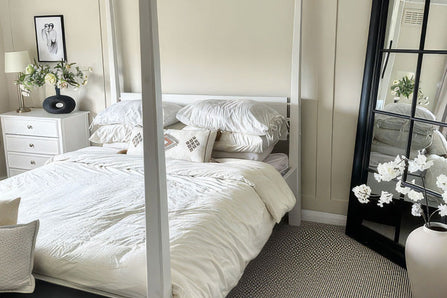
Which Carpets are the Hardest Wearing?
When choosing a new carpet, many homeowners ask the same question: Which carpet will actually last? Whether you’re furnishing a busy family home, renovating a hallway, replacing worn stairs, or simply trying to get the best value for money, durability quickly becomes one of the...
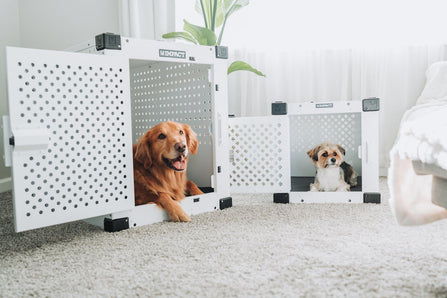
Stain-Resistant Carpet: A Complete Buyer’s Guide
We’ve all been there. Small feet thundering in from the garden, trailing mud across the hallway. A knocked-over glass of squash. A dog that’s decided the living room rug is the best place for a post-walk roll. For busy households, the carpet takes a real...
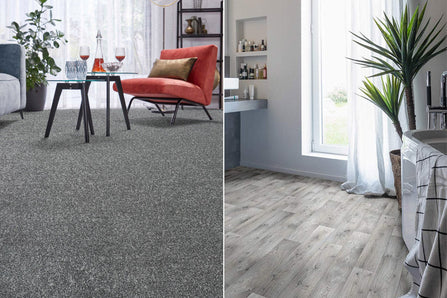
Carpet vs. Vinyl Flooring: The Complete Comparison Guide
Choosing brand new flooring for your home can be one of the biggest decisions you’ll make during a renovation. It changes how your home looks, feels, how much maintenance it’ll need, and even how warm your rooms stay during winter. If you’ve landed on this...